It may be helpful to think of your research process as a workflow or cycle composed of smaller iterative cycles nested within your broader approach.
This is an example of a basic, simplified model (Figure 1) - moving from your initial discovery process (including idea generation and searching for information), to data collection, then analysis, writing up results, publication, and lastly a consideration of outreach and impact of your work.
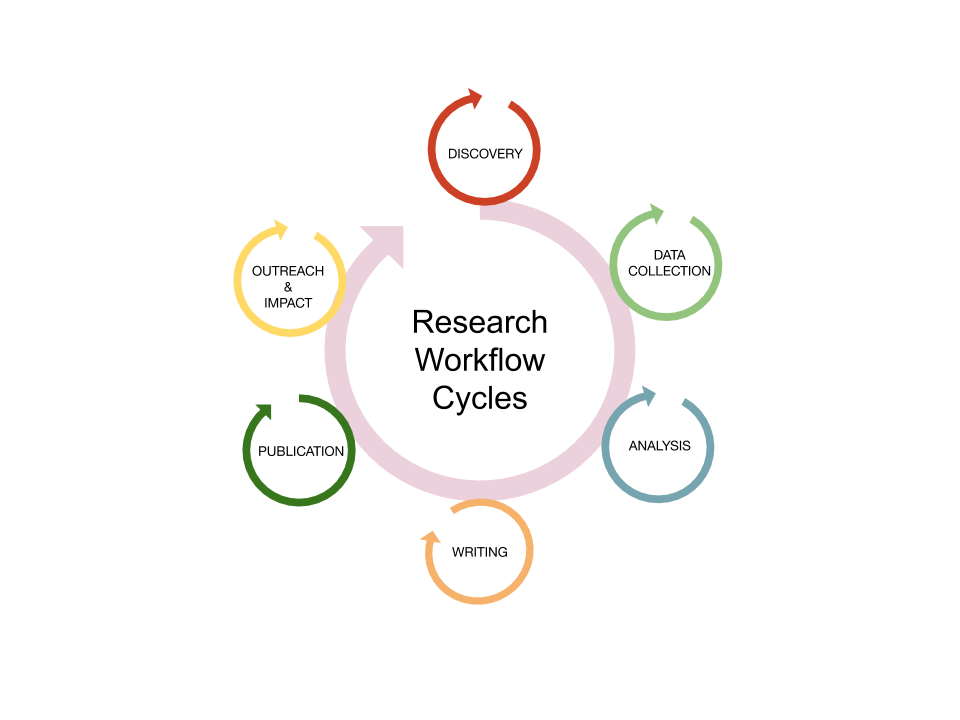
Figure 1:Basic Research Workflow
However, real workflows are never this simple.
Figure 2 shows an example of more complex, iterative model Bosman & Kramer (2016). You can see how multiple cycles nest within the larger cycle as each aspect of the workflow requires revisions, edits, clarifying experiments, etc.
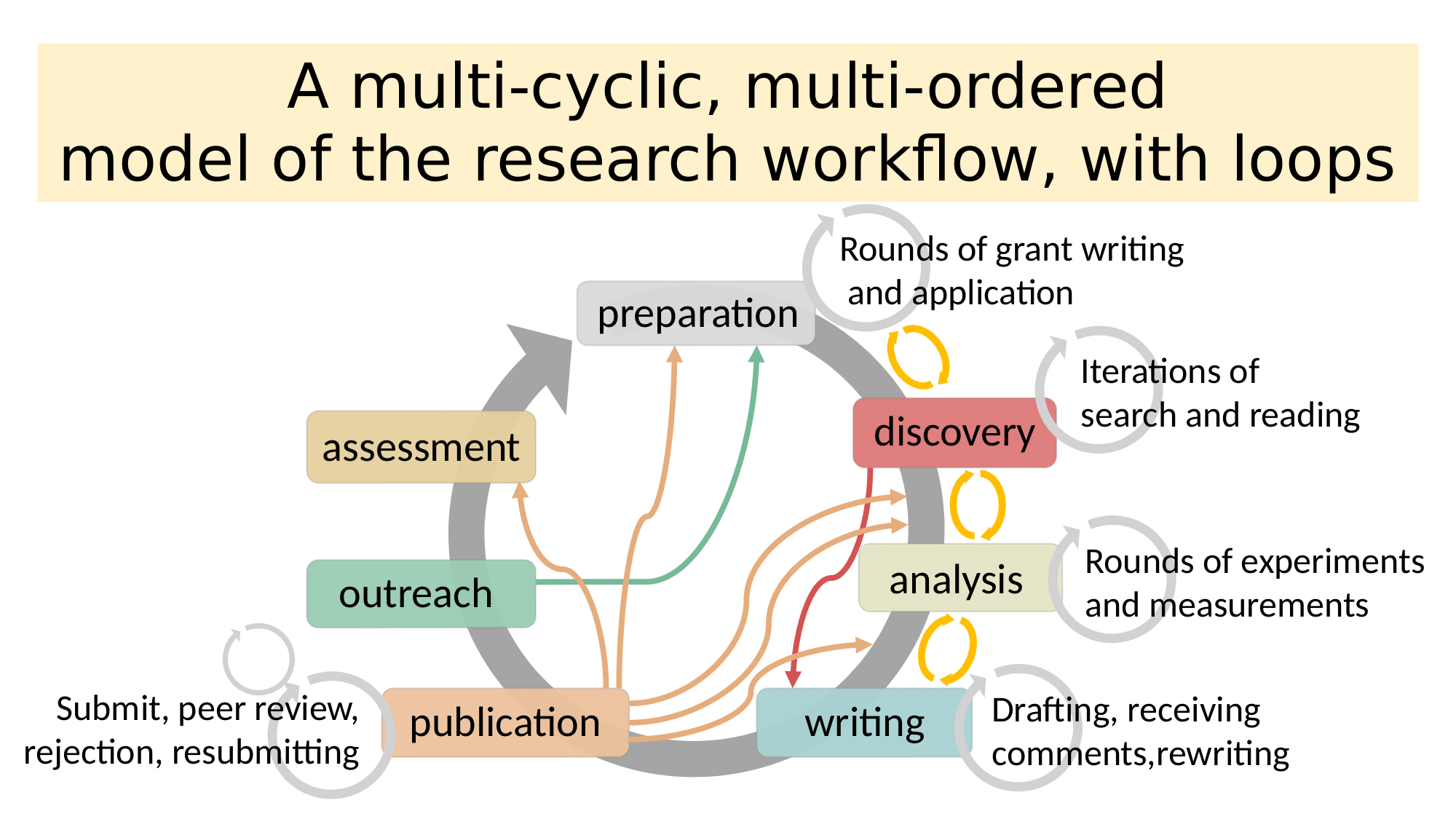
Figure 2:Multicycle Workflow
Here is an even more realistic view of what your day to day workflow might look like:
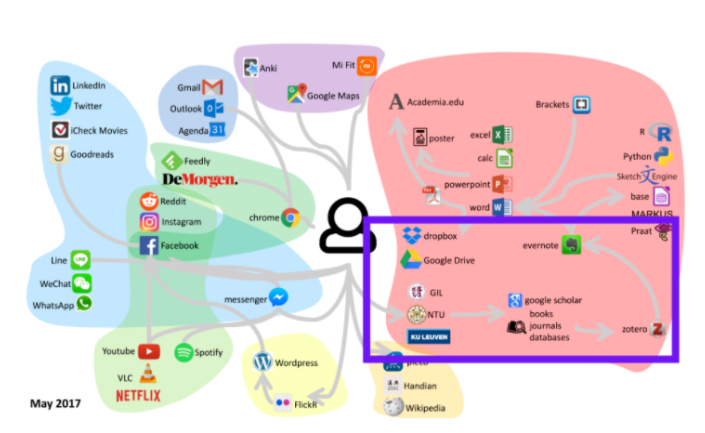
Figure 3:Honest Workflow
Thomas Van Hoey, a graduate student in linguistics, took an honest look at his own workflow, which is probably a better representation of how most of us get through the day Van Hoey (2020).
A workflow does not exist on its own, but is made of choices - which software, applications and products to use; how do they work together effectively; how open and reproducible are they; and what makes sense for a given task, subject domain or project.
The following image comes from Bosman and Kramer’s 2016 survey Bosman & Kramer (2016) of 20,000 researchers worldwide to give you a sense of how products sync to comprise a hypothetical workflow.
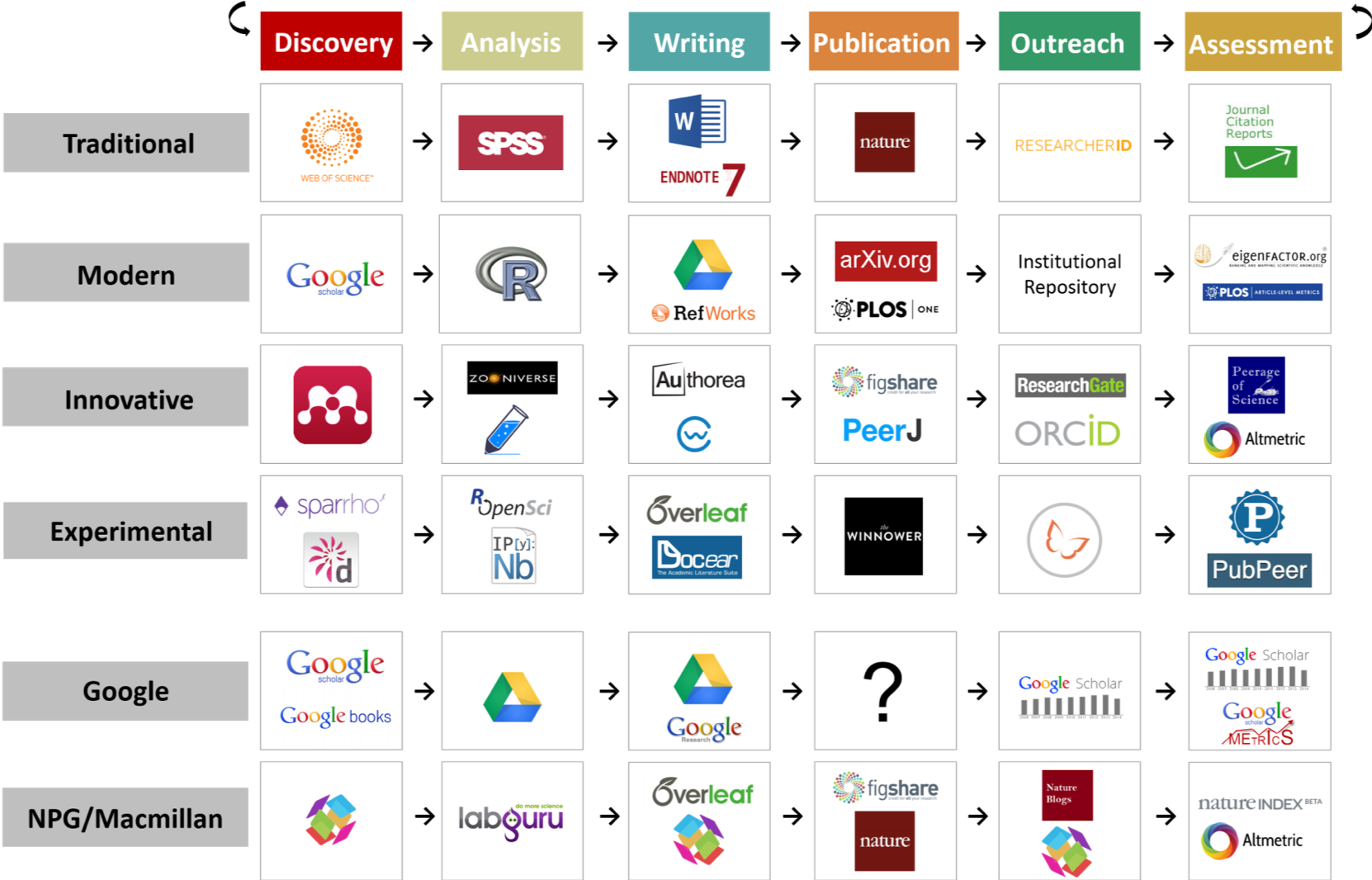
Figure 4:Hypothetical Workflows
As you go through these tutorials, we hope you gain a better sense of what tools are available for you here at Berkeley and how you can connect them thoughtfully to your preferred workflows.
- Bosman, J., & Kramer, B. (2016). Of Shapes and Style: visualising innovations in scholarly communication. 10.6084/m9.figshare.3468641.v1
- Van Hoey, T. (2020). Handling research (Academic Workflow 2). In Sinologica. https://www.thomasvanhoey.com/post/handling-research